In this episode, we sort common questions about regenerative medicine and exosomes one by one.
Hello, this is Samantha from Japan Regenerative Medicine Attend Center. This column series covers regenerative medicine and exosomes in 10 episodes. In Episode 9, we use a Q&A format to organize the misunderstandings and questions that many people have about regenerative medicine and exosomes. So far, we have covered how to read accident reports in Episode 1, the different types of regenerative medicine in Episode 2, the safety perspective on exosomes in Episode 3, how to identify risky treatments in Episode 4, who may be suitable for regenerative medicine in Episode 5, helpful information to prepare before consultation in Episode 6, the flow from consultation to treatment in Episode 7, and how to choose a good clinic in Episode 8. If you have learned a little but still feel uneasy, or if you are wondering how to think about the situation for yourself or your family, this episode is meant to help you sort those questions calmly.
Q1. Does regenerative medicine really work?
This is one of the most common questions. The important point is that "regenerative medicine" is not one single thing. Some treatments use stem cells, some focus on exosomes, and some use conditioned medium.
Results also depend on the disease or symptom, the patient's condition, how long it has been since onset, and the current treatment status. So it is hard to answer with a simple yes or no. What matters is which type of regenerative medicine is being considered, for whom, and for what purpose.
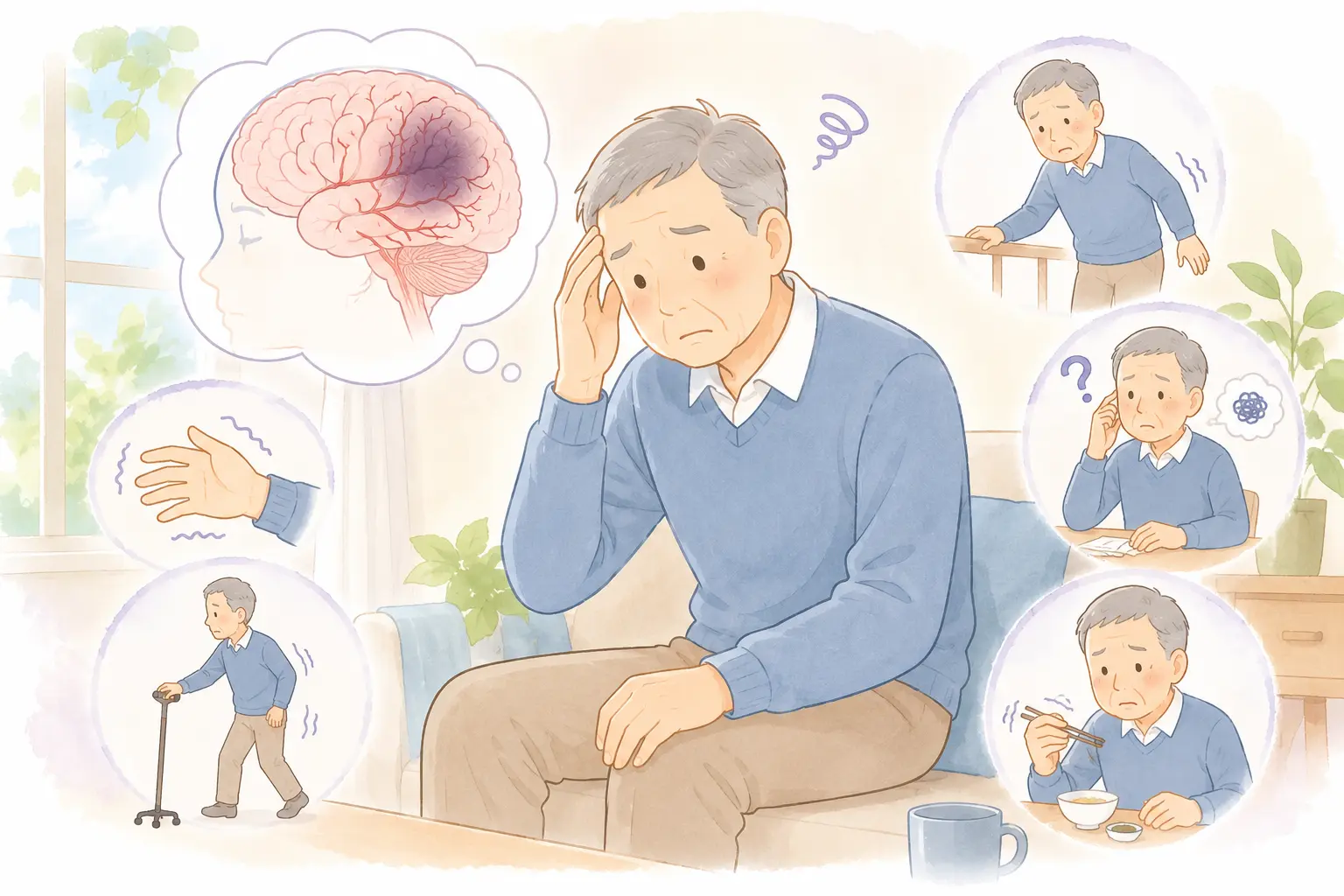
For example, after stroke, symptoms such as paralysis, numbness, speech problems, or cognitive changes differ from person to person. It is not a case where everyone with the same diagnosis should expect the same result. A physician should review the current condition and explain the purpose, possible benefits, and limitations before deciding.
Q2. Is exosome treatment dangerous?
It is natural to feel uneasy when you hear about regenerative medicine because of accident reports. But here too, the key is not to treat all regenerative medicine as one category.
As we explained in Episode 1 and in the special update, you need to separate what was put into the body, how it was made, how it was administered, how the physician was involved, and how the management system worked when something went wrong.
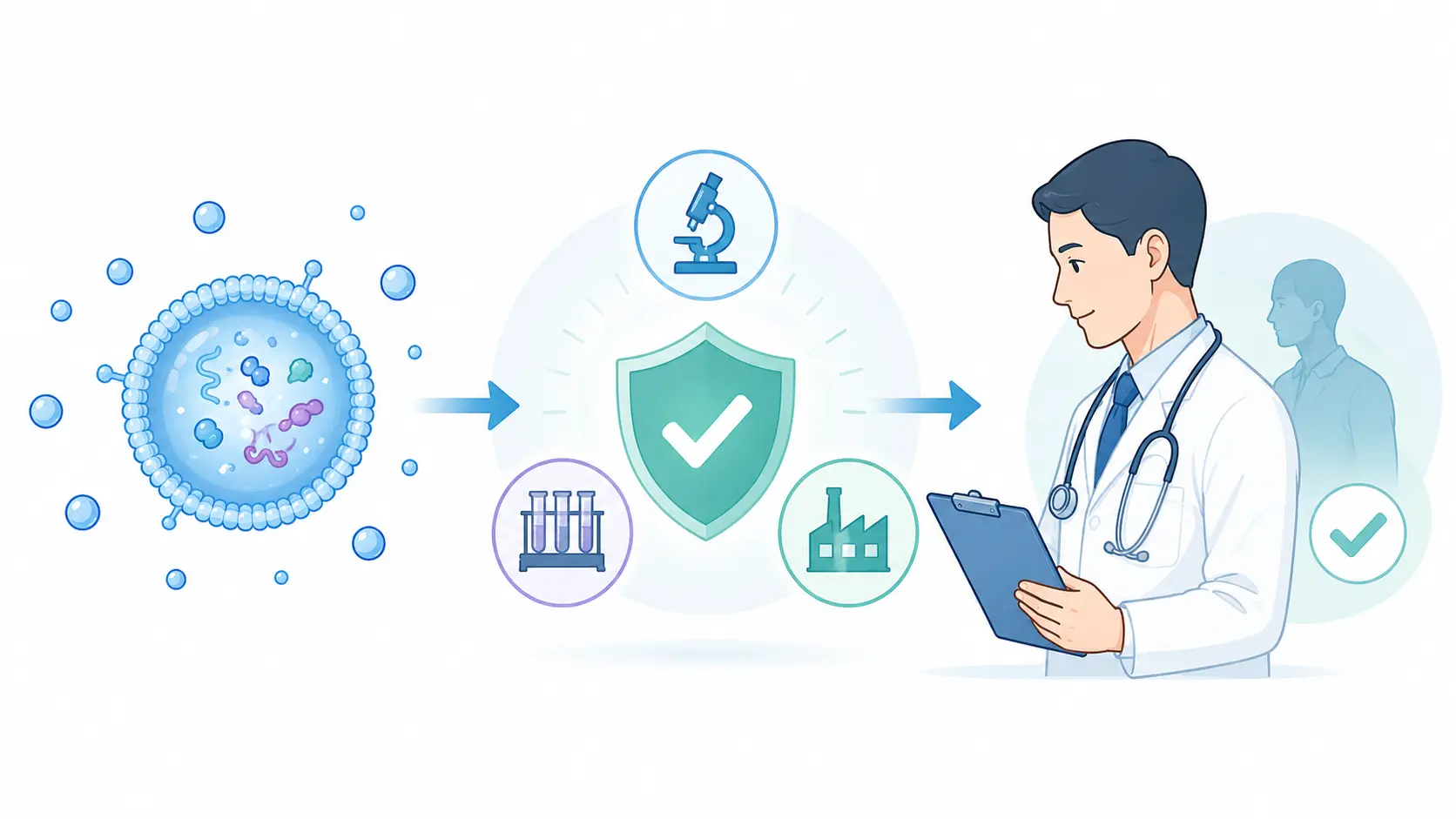
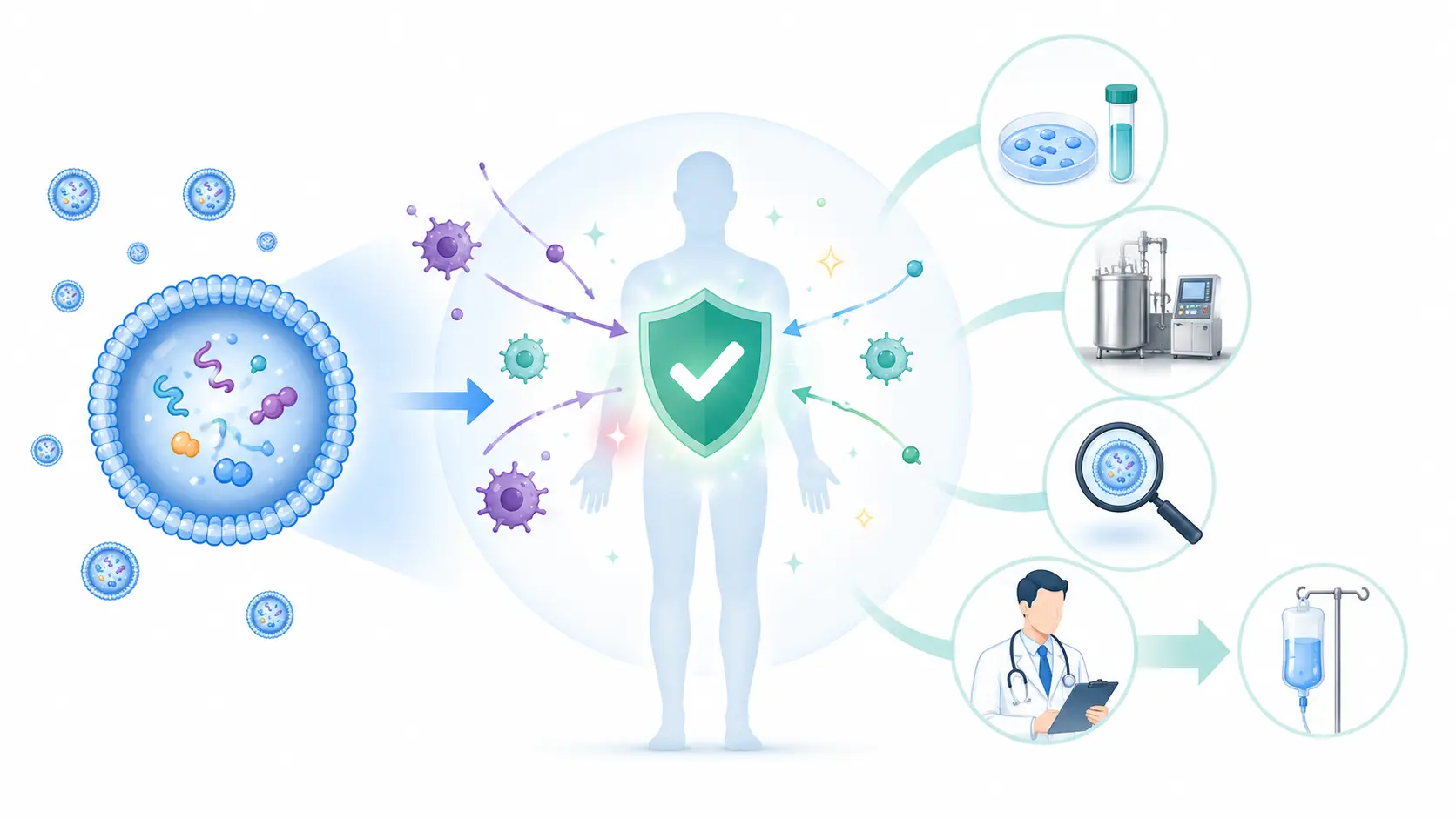
Exosomes are not cells themselves; they are tiny particles involved in cell-to-cell communication. That means the safety questions are different from those for cell therapy. But that does not mean "exosomes are always safe." You still need to check the source, manufacturing method, quality control, sterility, physician involvement, and pre-treatment evaluation.
Q3. Are there any side effects?
This is also an important question. In medicine, it is not appropriate to say "there are absolutely no side effects." Reactions can differ depending on the patient's condition and constitution.
A trustworthy explanation is not one that says there are no side effects. It is one that explains what reactions are possible, how they are checked, and how the clinic responds if something happens.
- What reactions may occur after treatment?
- What should I do if my condition changes?
- Are there medical history or medication checks before treatment?
- Are allergies or infections checked?
- Will a physician provide explanation and follow-up?
To reduce anxiety, it is better to know what may happen and how it will be handled than to be told that nothing will ever happen.
Q4. Are stem cell therapy and exosome therapy the same?
No. Both are discussed in the context of regenerative medicine, but the ideas are different.
Stem cell therapy introduces cells themselves into the body. Exosome therapy focuses on the tiny particles released by cells rather than on the cells themselves.
In simple terms, stem cell therapy is a "cell replacement" idea, while exosome therapy is a "message delivery" idea. Earlier in the series, we described stem cells as the "site supervisor" and exosomes as the "instruction sheet."
Q5. Are exosomes and conditioned medium the same?
These are often confused. Conditioned medium can refer to the liquid collected after cells are cultured, and it may contain many different components.
Exosomes, on the other hand, are tiny vesicles released by cells. So exosomes and conditioned medium are not the same term.
When you receive an explanation, it helps to confirm whether the product is conditioned medium or exosomes, how the exosomes are extracted and controlled, and how the components and quality management are described.
Q6. Can anyone with stroke aftereffects consult?
In some cases, yes, people can consult. But being able to consult is not the same as being a candidate for treatment. Every post-stroke condition is different.
- How long ago did the stroke occur?
- How severe are the paralysis or numbness symptoms?
- Are there speech or swallowing problems?
- Are there cognitive changes?
- What is the current rehabilitation status?
- Are there other illnesses or medications?
- Is the condition stable?
So you cannot say that everyone with stroke is a candidate, or that nobody is. It is important to organize the current situation first and then rely on a physician's judgment if needed.
Q7. Does consultation mean treatment starts right away?
No. Consultation does not mean treatment is decided immediately. As explained in Episode 7, the usual sequence is inquiry, information gathering, status confirmation, introduction to a medical institution, physician examination and judgment, and then treatment consideration if appropriate.
Consultation and treatment are separate stages. Consultation is not only for deciding on treatment right away. It is also the starting point for organizing what you know, what you do not know, what questions you should ask, and what other options should be considered.
Q8. What is the difference between insured care and self-pay care?
Insured care is medical care provided within Japan's public insurance system. The covered diseases, treatments, and patient cost-sharing are defined by the system.
Self-pay care is medical care that is not covered by public insurance. Costs and details can differ from one clinic to another, so there are more points to check.
- Why is it self-pay?
- What exactly is being used?
- What is included in the price?
- Where does the physician make the judgment?
- Are limitations and risks explained as well as benefits?
- How are quality control and manufacturing handled?
Q9. Does a more expensive treatment mean better results?
Not necessarily. Medical fees depend on many factors, including manufacturing processes, management systems, facilities, technology, and the regulatory framework. A higher price does not automatically mean better effectiveness.
Especially with self-pay care, prices can vary by clinic. When you look at cost, it is important to check what the fee is for, whether consultation and tests are included, how many doses are planned, whether there are extra fees, and whether the expected benefits and limitations are explained clearly.
Q10. Can people outside Japan consult too?
Yes, some people do consult from overseas. However, there are more things to check than there are for people already in Japan.
- Can you come to Japan?
- Do you need someone to accompany you?
- Do you need an interpreter?
- Do you have local diagnostic reports or test results?
- Can you share your current medications?
- Can you undergo examinations in Japan?
The final medical judgment is always made by the physician. Even when you consult from overseas, treatment is not determined just from documents alone.
Q11. Should I feel reassured if there is a testimonial?
Testimonials can be helpful as references. Hearing from someone with similar symptoms can give people hope.
But it is important not to rely on testimonials alone. Every patient's condition is different. Even if the same phrase "stroke aftereffects" is used, the onset timing, symptom severity, rehabilitation status, age, medical history, medications, and physical condition can all differ.
So a positive experience from one person may not apply to another person. Use testimonials as one reference point, but remember that your own case still needs a physician's judgment.
Q12. What should I use as my decision criteria?
When you are unsure, these five points help organize your thinking.
- What kind of treatment is it?
- Who makes the judgment?
- What is checked before treatment?
- Is quality control and manufacturing explained?
- Are risks and limitations explained too?
Keeping these five points in mind makes it easier not to get swept away by information.
Summary
The main point of this episode is that regenerative medicine is not one single thing. The way you think about it changes depending on the type and purpose of treatment. Whether it really works should be considered by separating the treatment content from the patient's condition. Exosomes are not cells themselves, and their name alone does not make them safe. For possible side effects and risks, you should confirm what might happen and how the clinic will respond.
For stroke aftereffects, it is important to organize the current condition first and then connect that information to a physician's judgment. Consultation does not mean treatment begins immediately. Understanding the difference between insured care and self-pay care helps you look at both the system and the actual content more clearly.
In short, the best way to reduce anxiety about regenerative medicine and exosomes is to separate each question and sort it out one by one.
Finally
When you research regenerative medicine and exosomes, you may find both reassuring information and worrying information. After seeing both, it can be hard to know what to trust. In those moments, do not rush to a conclusion. Start by organizing your questions.
Japan Regenerative Medicine Attend Center supports people from a non-medical-institution standpoint by organizing information and helping them choose where to consult. If you are not sure what to check for your own case, or if you want to sort out the basic questions about regenerative medicine and exosomes first, feel free to reach out.
If you are looking for information about support for stroke recovery, please also see the Brain Exosome information page.
Go to the Exosome Division TopRelated Podcast
A podcast based on the same content is planned for release. Once the YouTube version is available, it will be embedded on this page.
The podcast video is still being prepared. We will place the embedded player here after the YouTube URL is confirmed.
Key Takeaways
- Regenerative medicine is not one single thing; the way you think about it changes by type and purpose.
- Whether it works should be considered by separating the treatment content from the patient's condition.
- Exosomes are not cells themselves, and their name alone does not make them safe.
- For risks and side effects, check what may happen and how the clinic will respond.
- For stroke aftereffects, it is important to organize the current condition and connect it to a physician's judgment.
- Consultation does not mean treatment begins immediately.
- Understanding the difference between insured care and self-pay care helps you look at the system and the content separately.
Series Guide
Episode 1: Why Did Fatal Accidents Occur in Regenerative Medicine?
Episode 2: What Kinds of Regenerative Medicine Are There?
Episode 3: Why Are Exosomes Often Considered Safer?
Episode 4: How to Identify Dangerous Regenerative Medicine
Episode 5: Who Is Regenerative Medicine Suitable For?
Episode 6: Helpful Information to Prepare Before Consultation
Episode 7: What Happens From Consultation to Treatment?
Episode 9: Common Misunderstandings Q&A
Next Episode
Next, we will organize what you should know before starting treatment in "What You Should Know Before Receiving Treatment", including mindset, risk awareness, and how to set realistic expectations.