
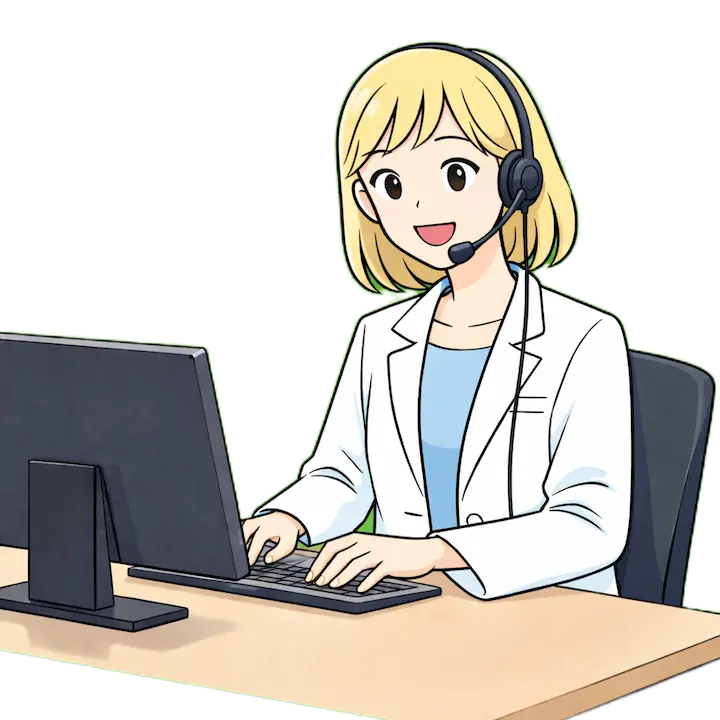
Preparation before consultation helps the physician understand your situation accurately. When you organize your condition, history, and questions in advance, the consultation becomes much easier to move forward.
Hello, this is Samantha from Japan Regenerative Medicine Attend Center. This column is a 10-part series about regenerative medicine and exosomes. In Episode 6, we are looking at the information that is helpful to prepare before a consultation. We will gently organize what is useful to sort out in advance when asking about regenerative medicine. So far, we have covered Episode 1 on how to understand accident reports, Episode 2 on the different types of regenerative medicine, Episode 3 on why exosomes are considered safe, Episode 4 on how to identify risky regenerative medicine, and Episode 5 on who regenerative medicine may be suitable for. At this point, the natural question is, "What should I prepare before I actually consult?" In this episode, we will walk through that preparation together.
Why preparation before consultation matters
When you want to ask about regenerative medicine, the treatment itself is usually the first thing you think about. In practice, however, it is very important to organize your own condition or your family member's condition before the consultation so that the discussion can move smoothly.
That is because regenerative medicine cannot be judged by diagnosis alone, each person's symptoms and severity are different, the way it should be considered changes with onset time and treatment history, and in the end a physician must make the decision. In other words, preparation is not "extra work"; it is the foundation that helps you communicate the right information calmly.
Basic information to organize first
At a minimum, it helps to organize the following information before consultation:
- Diagnosis
- Time of onset
- Main current symptoms
- Treatments already received
- Current treatments or rehabilitation
- Current medications
- Medical history and past conditions
- Allergies
These details are important even before you are connected to a medical institution. For example, when asking about recovery support after stroke, it makes a big difference to know when the stroke occurred, what symptoms remain, whether the symptoms are stable, and whether other chronic conditions are present.
What stroke patients and families should organize
This series is primarily for stroke patients and their families. When considering regenerative medicine for post-stroke recovery, it is especially useful to organize the following points:
- The date of onset, or at least an approximate time
- Current symptoms such as paralysis, numbness, speech problems, swallowing issues, or cognitive changes
- Which parts of the body still have aftereffects
- What is difficult in daily life now
- Whether rehabilitation is ongoing
- How the physician has explained the current condition
- Whether MRI or CT scans have been performed
- Whether recent medical records are available
When these points are organized, consultation staff can understand the situation more easily, and it becomes easier to connect you to the right medical institution if needed.
Put into words what you want to know
Another important point is to organize what you actually want to ask. For example, you may want to understand how regenerative medicine works, whether your condition might be considered for consultation, how exosomes differ from stem cells, what the consultation flow looks like in Japan, or what kinds of tests may be needed. Each person has different questions.
If you can organize even one or two key questions before the consultation, it becomes easier to sort out your thoughts and less likely that you will feel lost while hearing the explanation.
Keep any test results or documents together
If you already have documents, it helps to gather them in one place as much as possible. Examples include referral letters, test results, MRI or CT reports, discharge summaries, current medication lists, and rehabilitation notes.
These materials can improve the quality of the consultation. Of course, you do not need to have everything ready from the start. Even so, organizing what you already have can help you avoid feeling rushed later when you realize something was missing.
What families should prepare when asking first
In many cases, family members ask first on behalf of the patient. In that situation, the important thing is to understand the patient's condition as concretely as possible.
For example, when did the condition start, what symptoms are present now, what is difficult in daily life, what is the current treatment plan, and whether the patient is open to consultation. When these points are organized, the discussion becomes much more specific.
It is also possible for family members to become enthusiastic first and accidentally move faster than the patient can comfortably follow. For that reason, it is important to prepare while respecting both the patient's condition and the patient's feelings.
Additional points for overseas consultations
If you are thinking about consulting a medical institution in Japan from overseas, there are additional things worth organizing. For example, your country of residence, whether traveling to Japan is possible, whether you need a companion, whether Japanese communication is difficult, whether an interpreter is needed, and whether local diagnosis or test materials are available.
Japan Regenerative Medicine Attend Center is not a medical institution, but it does help organize information and guide people to medical institutions in Japan. For that reason, it is helpful to understand early that overseas consultations often move forward on the assumption that a visit to Japan will be part of the process.
You do not need to force a conclusion before consultation
This is also an important point. When you start thinking about consultation, it is easy to feel that everything must already be decided, or that you must know whether you will actually receive treatment.
In reality, you do not need to reach a final conclusion before the consultation. What matters is organizing what your current condition is, what you do not understand yet, and what you want to confirm. A consultation is not only for deciding immediately; it is also an entry point for sorting out the information you need to make a better decision.
Useful items to write down before consultation
To make the previous points practical, it helps to prepare a memo with items like the following:
- Diagnosis
- Time of onset
- Current symptoms
- Current concerns
- Treatments already received
- Rehabilitation being continued
- Current medications
- Medical history
- Allergies
- Any test documents you have
- What you want to know from the consultation
- Whether travel to Japan or interpretation is needed, if applicable
You do not need to write everything perfectly. It is enough to organize what you can.
Summary
To summarize the key points: preparation before consultation helps organize your condition and history; for post-stroke recovery support, onset time and current symptoms are especially important; writing down what you want to know makes the consultation easier; keeping documents and test results together is reassuring; and for overseas consultations, it is also helpful to organize travel and interpretation needs.
In short, preparation before consultation is the foundation for making a better decision.
Finally
When you are dealing with stroke aftereffects or thinking about recovery, it is natural to want even a little hopeful information. But that is exactly when it helps to slow down, organize the information, and identify what needs to be confirmed in your own case.
Japan Regenerative Medicine Attend Center is not a medical institution, but we can help organize information and support your search for a place to consult. If you are looking for information about recovery support after stroke, please also see our brain-focused exosome page.
Go to Division Top